

In my clinics I see a lot of clients who have jaw problems. This can be anything from tooth grinding and clenching (often at night), jaw popping and clicking, to earache and headaches.
Many people tell me their jaw problems came on or worsened following major dental work, for example, tooth realignment, implant or root canal work, or even jaw joint replacement. Dental solutions to jaw symptoms might include adjusting the height of some of their teeth or using a splint or mouthguard to protect their teeth at night.
More recently I am seeing clients who have major dental work planned and want to work with me to reduce the impact of this on their jaw by starting treatment with me before the dental work, continuing through and beyond.
This is refreshing news for me as I don’t find it at all surprising that dental work can bring on or exacerbate TMJ symptoms. Any dental work requires you to have your mouth open for prolonged periods, with dental fingers and equipment inside your mouth. Work can also involve drilling into teeth or the jawbone, root canal, or braces physically moving teeth into new positions. All of this equals pressure – often intense pressure for prolonged periods.
The effect of pressure on the jaw
Jaws are not well adapted to being held open or to pressure and the result is that the soft tissues – the muscles and the surrounding fascia – tighten in a protective reflex response.
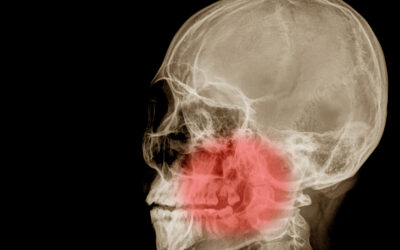
From a muscle point of view the primary cause of jaw problems is usually the masseter muscle. You have two masseters, one on either side of your face, which connect your cheekbone to your jawbone.
The masseter is a multi-layered muscular arrangement which makes it one of the strongest muscles in the body. It has a bite strength of 25kg on your front teeth and 90kg on your molars. It is also one of the most active muscles, almost constantly in use when you are awake. Not only does it enable talking and eating, masseter tension keeps your mouth shut, and it also helps posture by stabilising your neck.
It is not designed to hold your mouth open.
Instead the soft tissues of your jaw including the masseter are designed to be reactive, tightening when needed for movement and then returning to a relaxed state.
This explains why prolonged dental work can interrupt this natural state and result in increased tissue tension. Added to this, the tissues are also very reactive to stress or anxiety and will tense further which keeps the body in a constant state of high alert. The stress of a programme of dental work can therefore add to the load of an already tense jaw.
How myofascial release can help
Myofascial release treatment helps to release restrictions that have formed in the muscles and fascia of the jaw. This includes treatments in clinic and self-help exercises I give all of my clients to do at home.
Before dental work starts this can help to loosen these restrictions and improve jaw flexibility. During a programme of dental work it can help to keep the jaw moving and prevent a build-up of restrictions – this may not result in a huge reduction in symptoms at the time but it can at least keep them under control. After dental work is complete myofascial release can help the jaw to adjust to the ‘new normal’ for your jaw and teeth. Many people then opt to continue with a maintenance programme of myofascial treatment particularly if they know they have a tendency to grind or clench their teeth.
If you have major dental work planned maybe you should also consider investing in a myofascial release treatment programme. I treat TMJ and jaw pain issues at my clinics in Edinburgh and Leeds.


0 Comments