
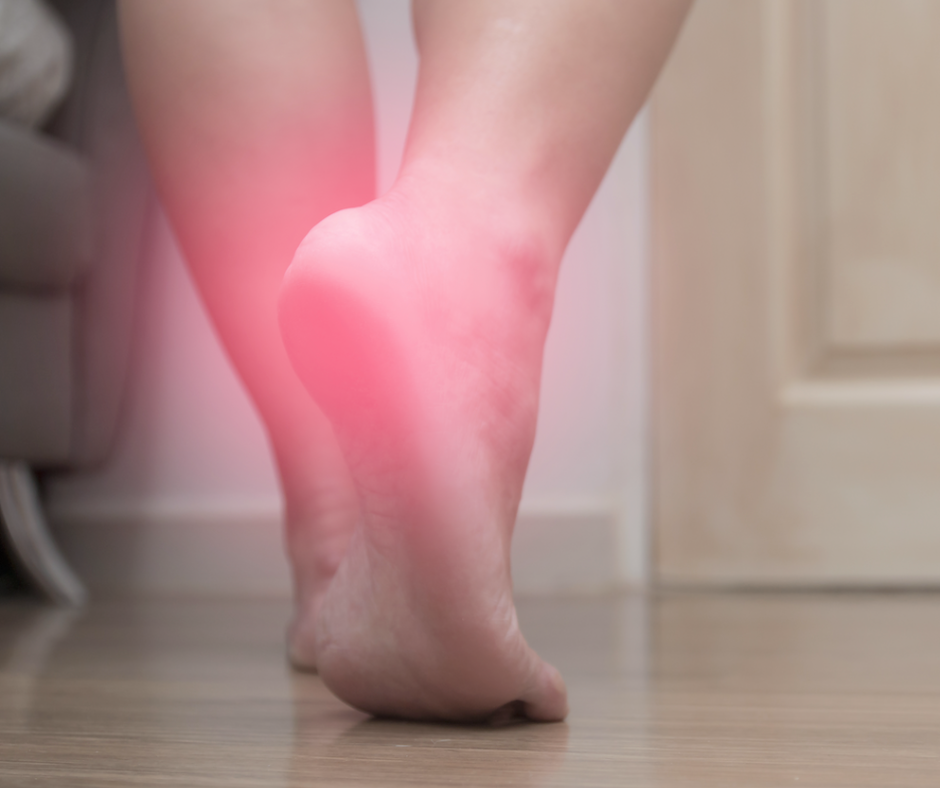
Plantar fasciitis is a common condition in adults that causes pain on the sole of your foot and around your heel and foot arch. It is usually worse first thing in the morning when you start walking – people often describe their first steps when getting out of bed as walking on claws. It then usually gets better the more you move about, but worse again if you stand, walk or run for prolonged periods. It can be particularly painful to stretch the bottom of your foot, for example standing on tiptoe or walking up stairs.
Although the pain is usually felt in the sole of the foot and the underside of the heel, many people also experience other symptoms such as pain in other parts of their foot, foot and ankle stiffness, and pain and swelling on the back of their heel. Medically these symptoms may be diagnosed as something else, such as tendonitis.
What does the name actually mean?
Plantar refers to the bottom of the foot, and the plantar fascia is a strong band of tissue that runs from the heel, beneath the arch to the base of the toes. It supports the arch and helps the foot to work properly, spreading your weight evenly through, so you can walk, run or stand without pain. And ‘itis’ refers to inflammation.
Simply put plantar fasciitis is inflammation of the plantar fascia which causes pain.
There are many possible causes of plantar fasciitis including a sudden increase in weight bearing exercise, standing for long periods of time, high or low foot arches, or being overweight.
Standard solutions for plantar fasciitis include painkillers, using ice to the foot, resting, wearing insoles and wider fitting shoes with arch supports, weight loss, avoiding long periods of standing or weight bearing exercise, and avoiding narrow or high heeled shoes. If the problem persists people may be recommended custom made orthotics and/or steroid injections.
However from a fascial perspective it’s also worth considering what else might be contributing to the condition. For example, an injury to the ankle, knee or even the hip may be part of the cause. Any such injuries can cause you to walk or stand differently often changing weight bearing from the injured to uninjured side. Over time this can create an imbalance that affects how you use your feet to stabilise your body. Plantar fasciitis can therefore often develop in both feet even though the original injury was only on one side.
Sometimes tension can build up in the muscles and fascia of the legs due to exercise, for example running or weight training. Very typically the calves can tighten which creates a direct pull into the plantar fascia through the connecting Achilles tendon at the heel. Tension further upstream in the hamstrings and buttocks can also contribute to this pull.
A fascial solution to plantar fasciitis is therefore to look beyond the feet and to release tension in the whole fascial chain which includes the legs, buttocks and hips. Myofascial release treatment can help as can self-help myofascial exercises. In our video we share a couple of exercises that can help to release tension in your plantar fascia.

0 Comments