
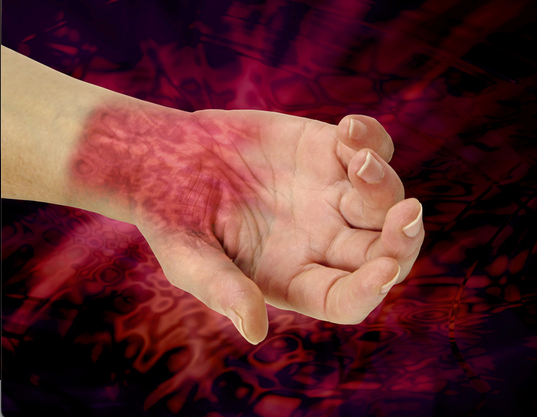
Carpal tunnel syndrome is a condition that can typically cause symptoms including tingling, numbness and sometimes pain in the hand, fingers and thumb. The symptoms can feel worse at night and can be accompanied by an ache that extends up the arm into the shoulder, and a loss of grip strength making fine finger movements difficult, such as doing up buttons. The cause of carpal tunnel syndrome is generally compression of the median nerve in the arm where it passes through the carpal tunnel formed by a group of small bones in the wrist. When this area becomes compressed it squeezes the median nerve resulting in symptoms.
Carpal tunnel is most common in the over 50s, particularly women, and can be caused by a variety of factors including arthritis, hormonal changes, diabetes, work related activities such as typing, using vibrational tools, and any repetitive use of the fingers and thumbs.
Initial medical assessment can include tests such as Tinel’s (tapping the median nerve on the palm side on your hand) or Phalens (bending your hand towards your forearm for up to a minute), either of which may reproduce your symptoms. However these are not reliable and often a nerve conduction test is required where a small electric current is passed through the carpal tunnel to assess if there is median nerve damage. Sometimes the results of even these tests can be inconclusive.
Medical treatment of carpal tunnel symptoms can include using a splint at night to support the wrist, steroid injections to reduce swelling, or in worst cases surgery to release pressure on the median nerve at the wrist. In some cases symptoms may still persist or return.
The persistence of symptoms tends to suggest something else may be going on. It is medically recognised that restrictions in the neck may be the source of symptoms, but diagnostic tests may not always show any structural causes such as a bulging or prolapsed disc in the neck.
In these cases one possible other cause of carpal tunnel symptoms can be restrictions in the fascia that may have formed at one or more points along the chain stretching from the head to the fingers.
From a fascial perspective everything in the body is connected to everything else as the fascia forms a bodywide network of tissue. Changes in balance to one area can cause symptoms to be referred to elsewhere.
The world of fascia research is an ever moving feast and currently focus is on evidence based research. Some of the older approaches have been overtaken n this process but they still can and do provide a logical explanation of how otherwise inexplicable symptoms of carpal tunnel can develop, for example.
One early pioneer of fascia was Tom Myers, a Rolfing practitioner and anatomy teacher, who recognised that muscles are connected in a bodywide map of interconnectedness which he presented in his seminal textbook Anatomy Trains first published in 2001.
Anatomy trains is based on the idea that there are myofascial meridians or lines in the body through which movement occurs and which Myers likened to train tracks. The arm lines run across the body from one side to the other tand can be subdivided into superficial and deep, front and back, but together their function enables co-ordinated movement which extends beyond just the arm and hand into the head, torso, hip and shoulder. Of particular importance is the scapula or shoulder blade which is effectively ‘tethered’ within the movement of these lines – often it is restrictions that develop in the movement of the scapula that lead to arm, wrist and hand issues.
Armed with this knowledge, and in the absence of any other structural issues, it starts to make sense that carpal tunnel symptoms can originate from restrictions in the neck and shoulder, but possibly even in the hips. Fascial restrictions not only compromise muscle movement, they can also impinge nerves, blood vessels and restrict free movement of bones and joints.
Hands-on myofascial therapy can help to progressively release these restrictions and return the body to more normal and pain-free balance. Myofascial self-help exercises can also help to release restrictions either on their own or in conjunction with a programme of hands-on therapy.
Contact us for more information about hands-on treatments at our Edinburgh clinic, and/or head to this video for some simple self-help exercises:

0 Comments