
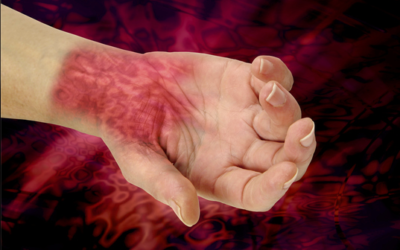
Trigger finger is a condition that can affect any of the digits of the hand including the thumb although it most usually occurs in the ring finger and thumb.
In trigger finger the affected finger gets stuck, usually when it is bent, and then it straights suddenly often with a snap. Sometimes it can only straighten with help and sometimes it can be painful.
The mechanical cause for trigger finger is a change to the tendon for that digit. All of our fingers and thumbs are moved by the tendons of the forearm muscles that extend into the hand and digits. Each finger has a flexor tendon (bends the finger) and an extensor tendon (straightens the finger); the thumbs have these too as well as other specific tendons that enable a greater range of movement.
Usually the tendons glide easily within their individual fascial sheaths enabling free movement. However sometimes the structure of the tendon sheaths changes and thickens. This can also lead to small nodules forming on the tendon at the base of the digit. These changes usually happen to the flexor tendons on the palm side of the hand and cause a catch in movement with the digit sometimes getting stuck.
Medical reasons for trigger finger are unclear although rheumatoid arthritis, diabetes and low thyroid function increasing the risk. The condition is seen most commonly in women over 50.
Medical treatment of trigger finger includes splints (to forcibly straighten the digit, usually worn at night), steroid injections or surgery to cut the tendon sheath.
Interestingly use of the hand is not regarded as a significant medical factor. However from a myofascial perspective what you have done with your hands would seem to be highly significant. As trigger finger occurs when you flex or curl your digits, for example to grasp something, it makes sense that a lifetime of activities that involve this movement would eventually lead to a build-up of tension and restriction in the area. The movement(s) could be anything from typing to chopping food, joinery, sewing, grasping handlebars etc. If anything is done repetitively and frequently it can develop into a type of repetitive strain injury (RSI) syndrome.
RSI is a very emotive description but it just means that the soft tissues – the muscles and fascia – have been overused which causes irritation, inflammation and eventually restriction. Considered from this perspective trigger finger seems to fit into this description as the changes to the tendon are a form of restriction. Given that muscles, tendons and tendon sheaths are all formed from fascia. Restrictions therefore all involve fascial restriction.
It therefore also makes sense from a myofascial perspective that releasing the soft tissues can help to release trigger finger. This also needs to involve the forearms as the tendons that work the digits originate from the forearm muscles. Any nodules that may have developed are a form of scar tissue which also responds well to myofascial treatment.
I have treated trigger finger successfully using myofascial release therapy which can progressively help to release restrictions and free movement. As part of this I also give my clients self-help exercises to do at home, particularly exercises to help release the forearms and therefore the tendons that work the digits. These can be beneficial to anyone whether or not they also have treatment sessions. Here are a couple of exercises that can help:

0 Comments