
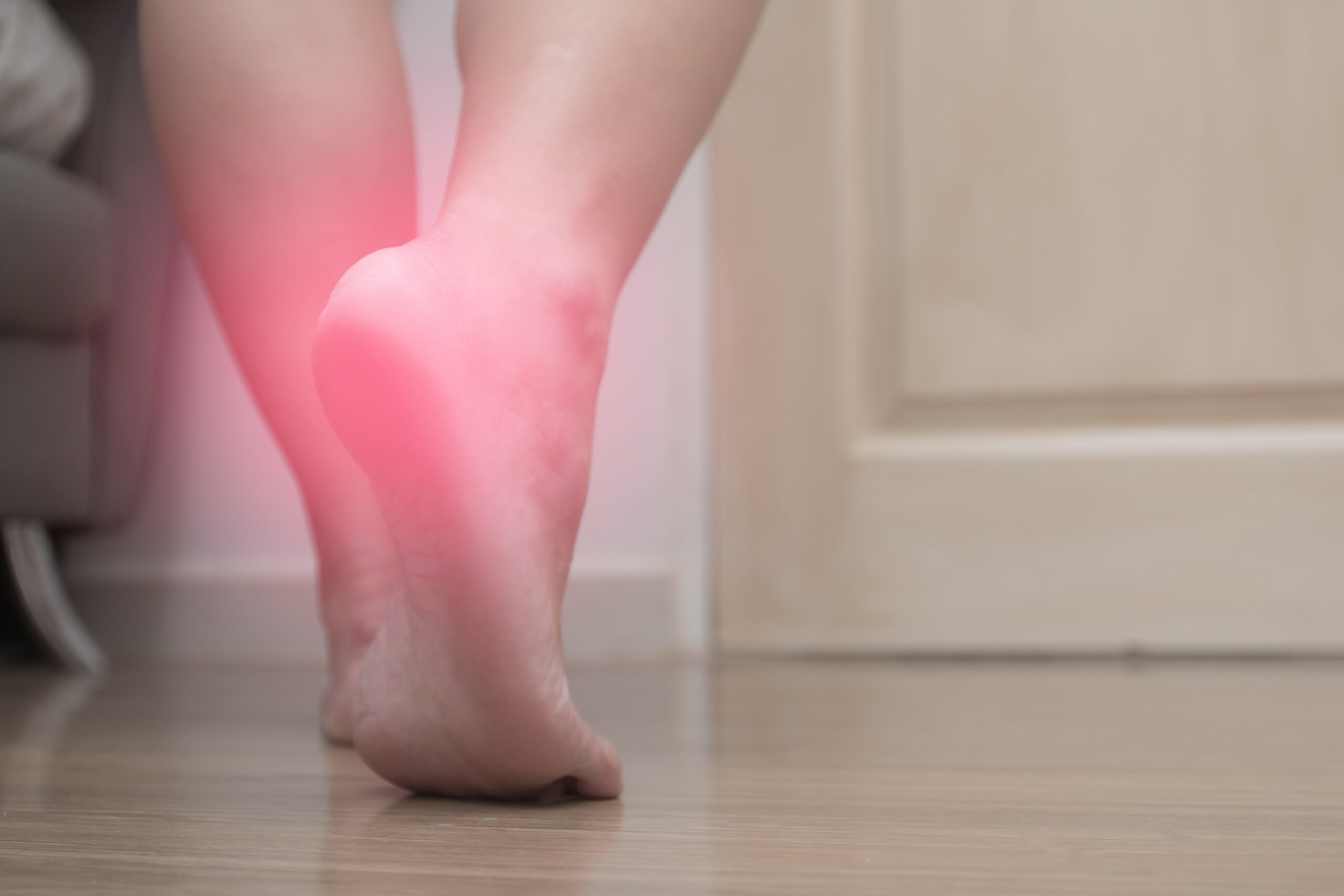
Heel pain is a very common occurrence which is often due to repetitive actions that can build up over time into pain.
The heel is a specialised part of the body that absorbs the impact of your body weight when walking, running or doing any kind of weight-bearing activities. For many people they don’t notice their heels until there is a problem and pain develops. This can become very debilitating as even small amounts of weight-bearing can be very sore.
Common reasons for heel pain
Some of the most common reasons for heel pain include:
Plantar fasciitis – plantar means the sole of your foot and fasciitis is inflammation of the fascia on the sole of your foot. The plantar fascia is a strong thick strip of fascia, which is the main connective tissue on the body.
Fascia is found everywhere in the body and forms a network of connective tissue that wraps round and through all other structures providing movement and support. Depending on the body area fascia can take many different forms. On the soles of the feet the fascia is thick and relatively inelastic. This provides a stable base for your body and protects the other structures of the foot underneath it. The plantar fascia covers the whole of the sole of your foot connecting into the heel bone and base of the toes.
Sometimes overuse can irritate the plantar fascia causing it to become painful. Overuse can be anything from standing too much (this condition also used to be called ‘policeman’s heel’ in the days of bobbies on the beat), too much walking or running especially with a sudden increase in activity, wearing high heels or shoes with no support.
Heel bursitis – bursitis is the inflammation of a bursa, or small fluid filled sac that acts as a shock absorber – these are found all over the body including at the heel.
Chronic inflammation of the heel pad – this can be caused by people who have an unusually heavy heel strike, so they walk very heavily. This can sometimes be the case for people who have fallen arches or are flat-footed, or who are overweight.
Fascial connections to heel pain
Whatever the cause of heel pain the problem is never just the heel itself.
Not only does the plantar fascia cover the sole of the foot, it also connects directly into the Achilles tendon at the heel. The Achilles tendon is the tendon connection of the calf muscles – these muscles enable you to walk, run and weight-bear by moving your feet and also bending your knees.
The calf muscles can become tight also due to too much walking, running etc – or equally due to wearing high heels which chronically tightens the calves – or due to sitting too much, particularly those people who sit with their heels raised off the floor which also chronically tightens the muscles. As the calf muscles become tighter, they pull on their connection at the Achilles tendon and this in turn pulls on the plantar fascia connection. As the heel sits at the junction of these two structures the increased pressure can start to cause irritation and then pain.
From a fascial perspective some heel pain can come from even further up the body as there is a whole fascial connection that runs up the back of your body from the plantar fascia through the legs and hips into the back and even the head. So it’s possible that some of your heel pain may be due to tight calves, or hips or even your back.
Self help for heel pain
If you have heel pain, rest is a sensible option as is temporarily stopping the activities that cause the pain, or changing to more ‘sensible’ and supportive footwear.
We treat heel pain and plantar fasciitis at our clinics in Edinburgh and Leeds.
There are also some obvious myofascial exercises you can do to help relieve heel pain and you can find these in our Fascial Fix for Foot Pain video:

0 Comments