
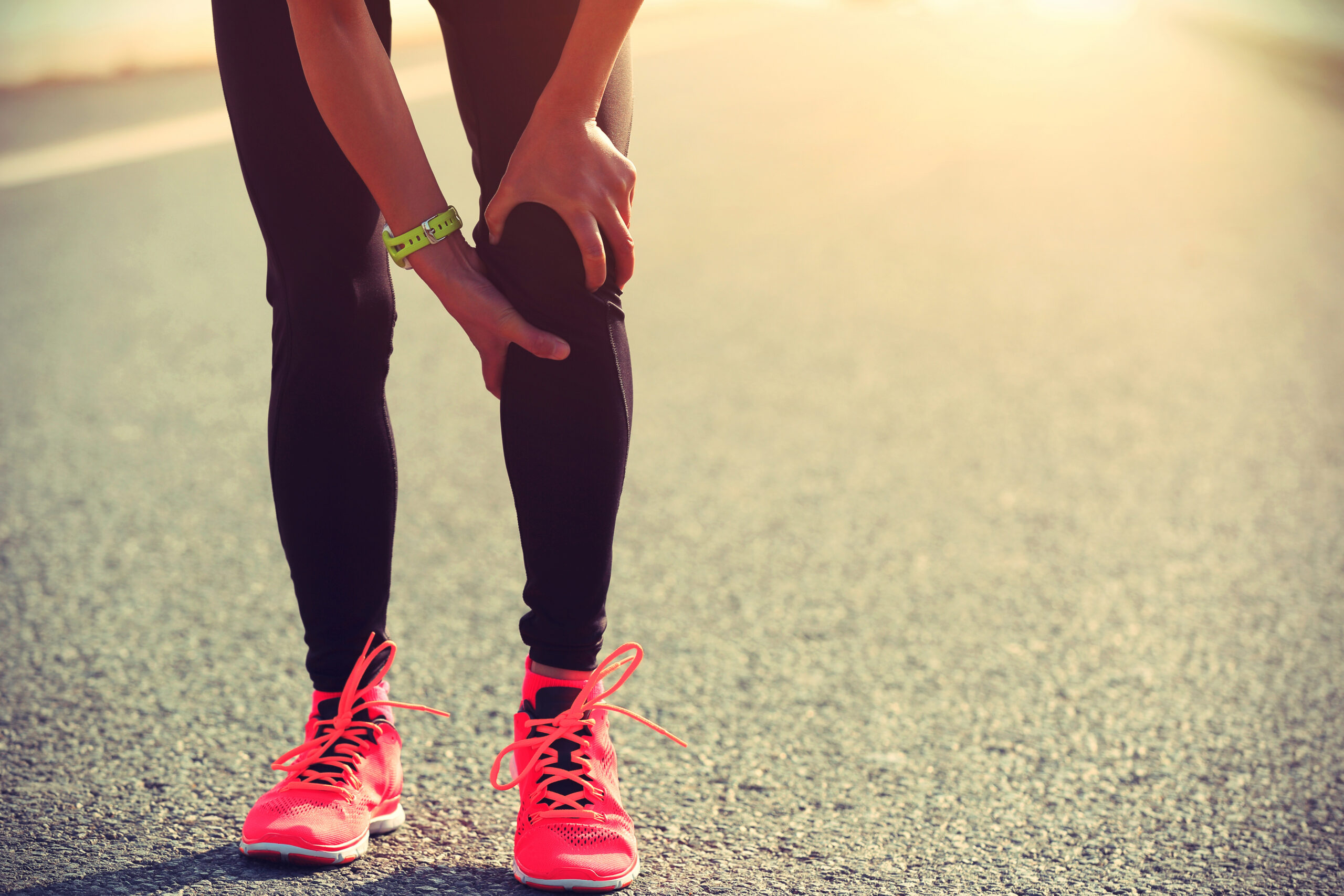
Knee pain can affect people of all ages. There are many causes of knee pain and some of the most common include:
Sprains & strains
Sports or sudden exaggerated movements can damage the muscles, ligaments and fascia that support your knee. In the short term this causes pain, swelling and bruising while the damaged tissue repairs.
Tendonitis
Another injury often associated with sports which affects the tendons that are the soft tissue bands attaching your muscles to bones. These can become painful and inflamed when overstretched.
Torn ligament, tendon or meniscus
In addition to tendons supporting the knee joint, there are also strong ligaments that maintain joint stability. These are the anterior cruciate ligament (ACL), posterior cruciate ligament (PCL), medial collateral ligament (MCL) and lateral collateral ligament (LCL). The first two cross in the middle of the knee joint and the last two support the outsides. These ligaments can commonly be damaged especially in sports where the foot is planted and then the leg turned and/or in contact sports – for example football, rugby, hockey. Sometimes a pop or crunch is heard at the time of the injury. The degree if severity ranges from mild with pain and swelling to more severe where the whole joint becomes unstable making it difficult to walk. Severe ligament injuries can require surgery to reattach the ligament.
The knees also have a meniscus which is a pad of cartilage found between the bones in the knee that protects them when you move. It usually gets damaged with twisting movement and can tear causing swelling and making it difficult to move the knee.
Osteoarthritis
Knees are weight bearing and take a lot of pressure during our lifetimes. As we grow older a combination of activities, tightening of the soft tissues around the knee and our natural posture can cause the cartilage inside the knee to wear away, often unevenly. As this happens the bones can become inflamed and deformed which causes pain and stiffness in the knees especially when weight bearing.
Bursitis
Bursae are found all over the body and are fluid-filled sacs that act as natural shock-absorbers around the joints. Sometimes the bursa can become painful and swollen which is bursitis. In the knees the bursa under the kneecap can become inflamed – this is housemaid’s knee often caused by too much kneeling especially on hard surfaces.
Bakers cyst
This is a cyst that forms at the back of the knee and is a soft fluid filled lump. It can make it more difficult to bend your knee and may affect walking. This type of cyst can often develop spontaneously with no underlying cause.
Generally most knee conditions will cause swelling around the joint with associated stiffness. The skin may be red and warm to the touch. There may be pain and combined with the swelling this can make it difficult to move the knee or to weight bear. Sometimes there might also be weakness or instability and popping or crunching noises.
Depending on the condition or injury it may take a few weeks for your knee to make a full recovery. When acute it’s advisable to rest your knee as much as possible, to use ice to reduce the swelling and also medication as advised.
Once your knee starts to recover you may be left with some residual chronic pain especially after using your knee and you may also notice some pain or tightness in the other leg which will have worked harder to support you.
If this is the case then may be worth considering myofascial release. Myofascial therapy helps to release restrictions and tightness that may have formed in your soft tissues and help your legs to return to more normal function. We offer myofascial release at our clinics in Edinburgh and Leeds.
You can also use myofascial self-help exercises and in this video we share a couple of simple exercises that can help your knees:
0 Comments